News

Government of Montserrat Drafting Policy To Support Teachers

Minister for Education, Dr, the Honourable Ingrid Buffonge has stated that the ministry has drafted a strengthening and support policy for teachers to help them navigate the daily tasks of dealing with students development. She however said that further work is required before it is presented to the Cabinet for consideration. Speaking in parliament, Dr. Buffonge said the purpose of the policy is to address the conditions in which teachers work, and to address the support that they require. She said the Government has “engaged with a company to provide continued professional development free of charge for our teachers. This supports the Education Transformation Project Manager and the Transformation Team’s intention to establish weekly CPD opportunities for teachers. The student census points to areas that should inform this development and really CPD must include how to better communicate with adolescents and effective ways in which teachers can engage with students and effective ways of using technology and lessons. Dr. Buffonge outlined that the OECS Harmonized Curriculum will “provide the foundation of the curriculum alongside relevant aspects of the Montserrat Curriculum which was developed in 2022 in particular for its specific cultural components. And this hybrid approach will draw both regional support and local relevance.” The OECS Learning Hub provides support including assistance with lesson planning. We have also paid for the education management information system and electronic management in education. Funding has been requested for equipment to help schools and teachers to deliver part of their work electronically,” she announced.

Government of Montserrat Drafting Policy To Support Teachers Read More »

Four Tourism Investment Proposals on the Table as Government Seeks to Diversify Economy

The Government of Montserrat is considering four tourism and hospitality investment proposals as it works to broaden the island’s economic base. Premier and Minister for Finance, the Honourable Reuben T. Meade says the proposals remain at various stages of discussion. He revealed that one proposal is for a luxury resort with a facility of up to 200 rooms and associated villas. The Premier revealed that the “luxury tourism development on the West Coast, is at the early engagement stage and the government remains in contact with a proponent. The proponent has proposed employment of approximately 3,800 direct jobs at full build out and investment value has not yet been submitted.” He said a luxury resort and supporting infrastructure “is at the information exchange stage and the government has identified Little Bay as its preferred location. The proponent’s concept proposes a 200-room facility with associated villas and investment value. An employment projection has not yet been submitted.” Premier Meade also revealed a proposal for Little Bay, with the proponent exploring development opportunities at Little Bay, and “this again is at exploratory stage and no investment value or employment projection has been submitted.” The other proposal is a “Wellness and Recovery Retreat at Baker Hill. The proponent has proposed a 16 to 20 bed facility and the government is awaiting an updated investment proposal. The figures stated are those proposed by the proponents and have not yet been assessed by the government,” the Premier explained. He said that the assessed investment values and employment figures will be “reported to this house once the required financial and business plans have been received and evaluated.”

Four Tourism Investment Proposals on the Table as Government Seeks to Diversify Economy Read More »

Representation Matters in Deep-Sea Mining: Giving Montserrat and Other OTs a Voice

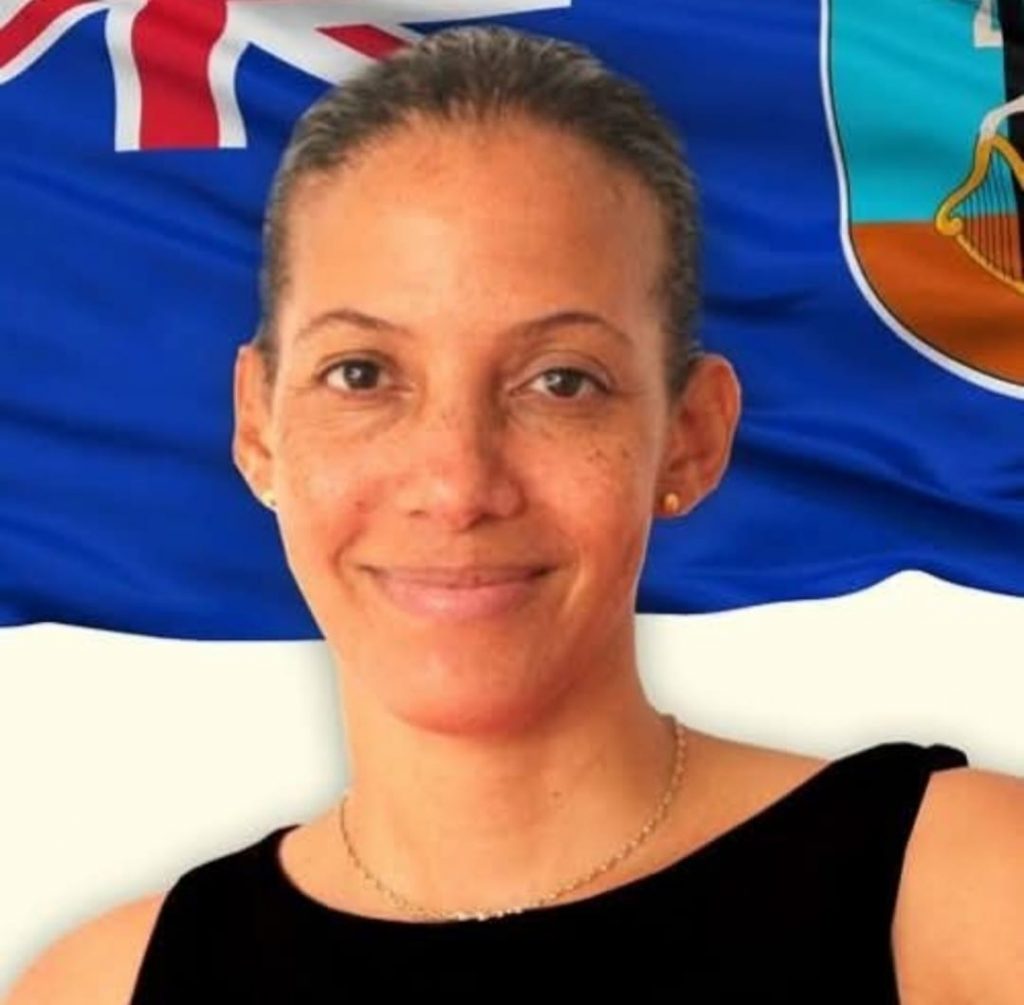
Written by: Keyola Greene Montserrat depends heavily on the ocean. It has supported the economy, boosted tourism, facilitated transportation, and sustained livelihoods, but when decisions about the future of the deep seabed are negotiated internationally, who actually speaks for Montserratians? This question reaches far beyond our black-sand shores and opens up a wider conversation about representation, influence, and the future of the Caribbean Sea. Increased interest in the emerging deep-sea mining industry has sparked concern about how the region is represented in international ocean governance and who has a seat at the table. For decades, Caribbean islands have collaborated to address issues that transcend their individual borders. But what does that cooperation look like when the seas connecting the region do not recognize political boundaries, and everyone does not possess the same or equal power to influence change? For overseas territories like Montserrat, it is more complicated than regional collaboration. It is about individual representation, access to the decision making process, and being able to influence the course of action that will directly affect us. Deep-Sea Mining The deep sea, which is generally classified at a depth where light begins to fade (typically around 200 meters), has been described in a 2007 UN Environment Programme report as “the oldest and largest biome on Earth” that “we have little knowledge of”. It is home to diverse and largely unexplored ecosystems, with unique species and habitats that have adapted to extreme conditions such as darkness, high pressure, and low temperatures. On the seafloor in some parts of the deep ocean are polymetallic nodules, which contain valuable mineral deposits such as cobalt, nickel, manganese, copper, silver, zinc, and other rare metals. These nodules are among the primary targets of deep-sea mining Proponents argue deep-sea mining could provide additional sources of minerals needed for various technologies, while critics question whether the environmental risks are justified given the scientific uncertainties. Much of the exploration and commercial attention has primarily been focused within the Pacific Ocean, particularly the Clarion-Clipperton Zone between Hawaii and Mexico, with small projects taking place in parts of the Atlantic, Indian, and Western Pacific oceans. However, discussions are ongoing over how exploitation should be governed, and while the Caribbean is not currently under the spotlight, some Caribbean states are part of the conversations. Why DSM Matters for the Caribbean The Caribbean’s interest in deep-sea mining should be heightened by the fact that decisions made about commercial seabed mining in one area could set precedents for how the wider ocean is governed. When assessing the Caribbean’s role in deep-sea mining, the region must look to accountability, preparedness, and influence.  Senior Campaigner at RISE UP for the Ocean, Khadija Stewart, says governments considering their involvement must weigh the potential economic benefits against public resources, risks, and limited capacity. “If governments are investing significant public resources in preparing for or participating in deep-sea mining, they should be able to demonstrate why that investment is in the national interest,” she said.  Stewart said, “Building the institutions needed to regulate a new extractive industry has to be weighed against the many other urgent ocean, climate and development priorities facing the region.” “Governments are operating with limited scientific, technical and financial capacity while trying to respond to multiple crises at once. Adding another poorly understood layer of risk without knowing the scale, duration or cumulative consequences would make an already difficult governance landscape even more challenging,” she said.  Concerns of deep-sea mining should not solely be based on what happens at a mining site. Independent Ocean Conservation Policy Consultant Bobbi-Jo DoBush warns that “plumes from deep-sea mining could travel hundreds or thousands of kilometers and affect the entire midwater food web, up to commercially important fish.”  “Noise from deep-sea mining would affect many animals, including those that use sonar for communication, including whales, which provide significant tourism revenue,’ she said.  Stewart says this creates a serious preparedness challenge. “We cannot adequately plan for impacts that science still does not fully understand. Significant gaps remain around deep-sea biodiversity, ecological connectivity, ecosystem functions, recovery and the potential wider consequences of industrial-scale disturbance,” she said. What does meaningful representation look like? The international seabed is governed by the United Nations Convention on the Law of the Sea (UNCLOS), with the Jamaica-based International Seabed Authority (ISA), the international organisation responsible for organising and controlling mineral-related activities in the Area. Caribbean States that are parties to UNCLOS are automatically members of the International Seabed Authority and participate in its Assembly, the Authority’s plenary decision-making body. These include Antigua and Barbuda, The Bahamas, Barbados, Belize, Cuba, Dominica, the Dominican Republic, Grenada, Guyana, Haiti, Jamaica, Saint Kitts and Nevis, Saint Lucia, Saint Vincent and the Grenadines, Suriname, and Trinidad and Tobago. Participation in the ISA Council is more limited: in 2026, Jamaica and Trinidad and Tobago are the Caribbean states serving on the 36-member Council, where much of the detailed negotiation on the regulatory framework for deep-seabed mining takes place. Caribbean Overseas Territories have different constitutional arrangements and do not participate in the ISA in the same way as independent states. For British Overseas Territories, for example, the UK is responsible for external relations, while the territories retain significant self-government.  For British Overseas Territories (BOTs) like Montserrat, the question of who has authority over deep-sea mining has been an ongoing discussion in the United Kingdom (UK) Parliament. On 24 May 2021, the late Lord Jones of Cheltenham asked  the Government whether it had the power to issue deep-sea mining licenses in the waters of BOTs and whether it planned to do so.  In his response, then Minister of Government Lord Callanan said “the Deep Sea Mining Act 1981 (as amended by the Deep Sea Mining Act 2014) sets out the Government’s powers in relation to issuing deep sea mining licences, including the relationship with contracts granted by the International Seabed Authority (ISA).” At the time, he said, “no such Order in Council or Statutory Instrument has been taken forward, and there are no current

Representation Matters in Deep-Sea Mining: Giving Montserrat and Other OTs a Voice Read More »

Credit Union Week Launched in Montserrat to Highlight Member Achievements and History

The St Patrick’s Cooperative Credit Union here will join Credit Unions world wide is celebrating International Credit Union day. Celebrated annually on the third Thursday of October, the day is used to reflect on the credit union movement’s history, promote its achievements, recognize hard work and share member experiences. Speaking on the What’s On Your Mind Radio programme, Tuesday, Manager of the St Patrick’s Cooperative Credit Union, Paul Maxwell, outlined the Credit Union’s planned week of activity. A major highlight of the week is an awards ceremony and dinner. International Credit Union day will be held on October 15th held under the theme “Cooperative Finance: A Steady Signal in a Noisy World.”

Credit Union Week Launched in Montserrat to Highlight Member Achievements and History Read More »

Residents Urged to Take Practical Steps to Reduce Disaster Risks

The Disaster Management Coordination Agency (DMCA) has urged residents to strengthen household preparedness and take practical steps to reduce disaster risks. The call came as the island joined the rest of the world in observing International Day for Disaster Risk Reduction on Tuesday, under the theme, “Resilience Starts at Home.” Director of the DMCA Lt. Col. Alvin Ryan said while Montserrat faces multiple hazards that cannot be prevented, residents can take steps to reduce their risks and protect lives. Lt. Col. Ryan also reminded residents that preparedness should continue throughout the year, and not only when a hazard threatens.  

Residents Urged to Take Practical Steps to Reduce Disaster Risks Read More »

Climate Factors to Affect Montserrat Remainder of the Year

Several climate factors are expected to affect Montserrat during the remainder of the year. In a social media post, the Disaster Management Coordination Agency (DMCA) here, broke down the latest outlook provided by the Caribbean Climate Outlook Forum (CariCOF), and its significance for Montserrat. The outlook provides important climate information for the October to December 2026 period. During the second half of the Atlantic Hurricane Season and the transition out of the Caribbean Wet and Heat Seasons, very strong El Niño conditions are expected to influence the region. For Montserrat and the wider Lesser Antilles, this means several important climate considerations. Humid heat may linger, particularly during the transition out of the Heat Season, with heatwaves possible. Tropical cyclone activity, as well as showers, wet spells and excessive rainfall events are expected to occur less frequently than usual. However, lower frequency of these events does not mean that the region is free from risk. A single tropical cyclone event can still cause significant or catastrophic effects. The potential for flooding, flash floods and cascading hazards remains high to extremely high across the Caribbean. Heavy rainfall can have serious impacts, particularly in vulnerable areas. Saharan dust incursions is another climate factor to consider. Although less frequent at this time of year, dust incursions may further suppress tropical cyclone development while contributing to heat and poorer air quality. It was also noted that seasonal climate outlooks describe expected trends over months and do not predict specific day-to-day weather events. The DMCA encouraged residents to stay weather-aware and prepared. The Caribbean Climate Outlook Forum (CariCOF) seasonal outlooks are produced through the Caribbean Regional Climate Centre (RCC) of the Caribbean Institute for Meteorology and Hydrology (CIMH).

Climate Factors to Affect Montserrat Remainder of the Year Read More »

Government Announces Plans for 8 more social Housing Units

The Government of Montserrat plans to construct eight additional social housing units over the next 18 months, advancing Phase 1 of the Drummonds Housing Project. This project already features two apartment blocks. Minister for Housing, the Honourable John P. Osborne, confirmed that funding for four of the eight new apartments has already been secured. He outlined that the Department of Housing intends to continue phase one of the social housing development at Drummonds over the next 12 to 18 months. The current plans provide for the construction of two multi-storey residential blocks with four housing units in each block, providing a total of eight social housing units. Mr. Osborne explained that the units will “comprise a mix of one bedroom and two bedroom accommodation and are intended in part to address the need to replace existing family housing units that have become derelict and have exceeded their useful lifespan.” According to him the ministry is currently undertaking the necessary planning, design, funding and procurement arrangements to advance this development, explaining that these processes are essential to ensuring that the project is appropriately designed, adequately funded and procured in accordance with the applicable requirements. He noted that the commencement and timing of construction will therefore depend on successful completion of these processes and the availability of the necessary financial and other resources. “The continuation of phase one at Drummonds forms part of the ministry’s broad efforts to increase the supply of suitable and affordable social housing for individuals and families in need. The government remains committed to addressing the housing needs of our community and to making prudent and effective use of the resources available to support the provision of safe, suitable and affordable housing,” he stated.

Government Announces Plans for 8 more social Housing Units Read More »

Legislative Assembly Approves $5 million for Essential Hospital Equipment

The Legislative Assembly has approved an additional five million dollars to purchase essential equipment for the New National Hospital. The funds were approved under the Supplementary Appropriation (2026) Bill, 2026, which was debated earlier this week. Premier and Minister of Finance Honourable Reuben T. Meade stated that the new funds are in addition to 4.5 already approved for hospital, which is due for completion in 2027. Premier Meade said the Supplementary Appropriation Bill also covers expenditure to address pension payments cleaning of government offices, and Access. He said approval was sought for expenditure of $1.5 million for Programme 120 to address pension and gratuity payments for the balance of fiscal year 2026-27. Mr. Meade explained that of that amount “we’re looking as well as ensuring that persons who are obtaining pensions of less than $900 that that is accounted for. There were shortfalls in gratuity payments. We’re trying to ensure that persons who have served can get their gratuities paid and that persons who are entitled to a pension, that their pension payments are adequately financed. Secondly, to approve expenditure of $443,000 to cover the shortfall in the funds to meet contractual cleaning obligations. Government offices are cleaned by a Co-op that was initiated some years ago. Prices have gone up. Minimum wage has gone up. We need to ensure that they get the additional funds required. And additionally, another company apparently has received a contract to assist in the cleaning. So, it will be split between the co-op and the new company. $443,000, that is between now and March. The Legislature approved the expenditure of $2 million to cover the shortfall in access to facilitate increased air access to the Twin Otter and Islander operations. The premier explained that “these are funds which clearly we needed to put in so that we can keep the cost of travel into and out of Montserrat at subsidized levels.” The Government sought and received approval for $5 million to facilitate the procurement of essential equipment for the new hospital. According to Mr. Meade the Government already provided $4.5 million, and “here is the promise of the additional $5 million. We have a shortfall, which we will address possibly either in another supplementary later in the year, depending on our fiscal space.” $1.5 to cover claims against government arising from ongoing legal costs half a million to cover additional refund payments also got the nod of members of the Legislative Council.

Legislative Assembly Approves $5 million for Essential Hospital Equipment Read More »

Premier Meade Praises work Done on Montserrat Cultural Center

Premier the Honourable Reuben T. Meade is praising the refurbishment work done on the Montserrat Cultural Center building. The Center was used for the first time since refurbishment on Tuesday for the Opening of the Eighteenth Session of the Eighteenth Parliament. Premier Meade expressed gratitude to the Foreign Commonwealth and Development Office (FCDO) for the funds provided for the building’s refurbishment. He says the building will be used for dual purposes: as the house of parliament as well as a Cultural Center. He thanked the FCDO “for the provision of the funds and also the Speaker of the United Kingdom Parliament, Sir Hoyle, who championed the cause for the financing of a Parliament building in Montserrat.” Premier Meade explained that “unfortunately, we were faced with a challenge when it was determined that Montserrat was to be graduated from Official Development Assistance. This led to a decision by the funders that the allocated monies must be spent by March 31st, 2026. The Leader of Government Business said that this was later extended to June 30th, 2026. “Since there were no architectural renderings available at the time, it was determined in consultation with the FCDO that the best option was to utilise the funds to renovate the rather dilapidated Cultural Centre, which will be used jointly as a House of Parliament and the Cultural Centre. And today, Madam Speaker, we have opened this building as the House of Parliament. Later on, it will be opened for its other use as the Cultural Centre, a dual-purpose building,” he stated. The Premier also thanked those responsible for bringing the refurbishment works to completion including “the project management team led by Mr. Venrick Foster and Mr. Damien Williams, for bringing in the project on time and well within cost, to the various contractors and workers, who in spite of the many challenges of shipping, have completed the works to a satisfactory quality, to the joint government and FCDO project monitoring team, thanks very much for facilitating speedy decision making  on all elements of the financing. Through all the challenges, we have delivered a successful project.” Meantime, Premier Meade highlighted the acquisition of a new clerk’s table for parliament. The table was provided by the Canadian parliament at the request of former speaker of the House, Shirley Osborne. Premier Meade expressed gratitude to the Canadian parliament and former speaker Osborne for the initiative.

Premier Meade Praises work Done on Montserrat Cultural Center Read More »

Kirnon Calls on Parliamentarians to Help Strengthen Democracy.

Former Member of Parliament Charles Kirnon is calling on parliamentarians to strengthen local democracy by ensuring the work of the Legislative Assembly reflects the diverse views of the island. Speaking at the Opening of the new Parliamentary year at the Montserrat Cultural Centre on Tuesday, Kirnon urged members to put national progress ahead of partisan interests. He told them to take part in greater accountability, preparation and adherence to the rules of the House, stating that “we must engage the constituents regularly, not just during campaign season.” Kirnon said that Parliamentarians “must reject corruption and bribery and defend ethical standards in public office. We must disagree on policies without dividing the nation and we must learn and adhere to the rules of this House.” He explained that “while other rules can be looked at, the rules of this House governs this House. The Parliament must not be used to grandstand or politicise every issue. The Legislative Assembly is to primarily make laws and discuss policies and allocate funds. Kirnon also reminded the public that they have a role to play in ensuring democracy remains effective. He said a strong democracy depends on an active and engaged citizenry.

Kirnon Calls on Parliamentarians to Help Strengthen Democracy. Read More »