Environment

New Initiative to Improve Understanding of Montserrat’s Forests and Water Resources

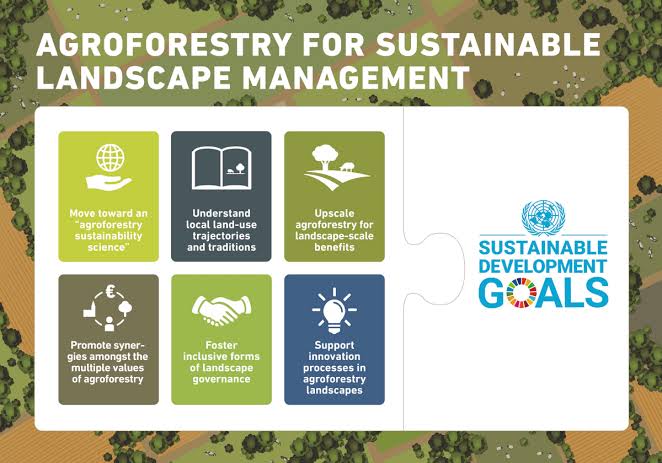
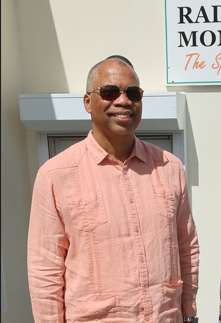
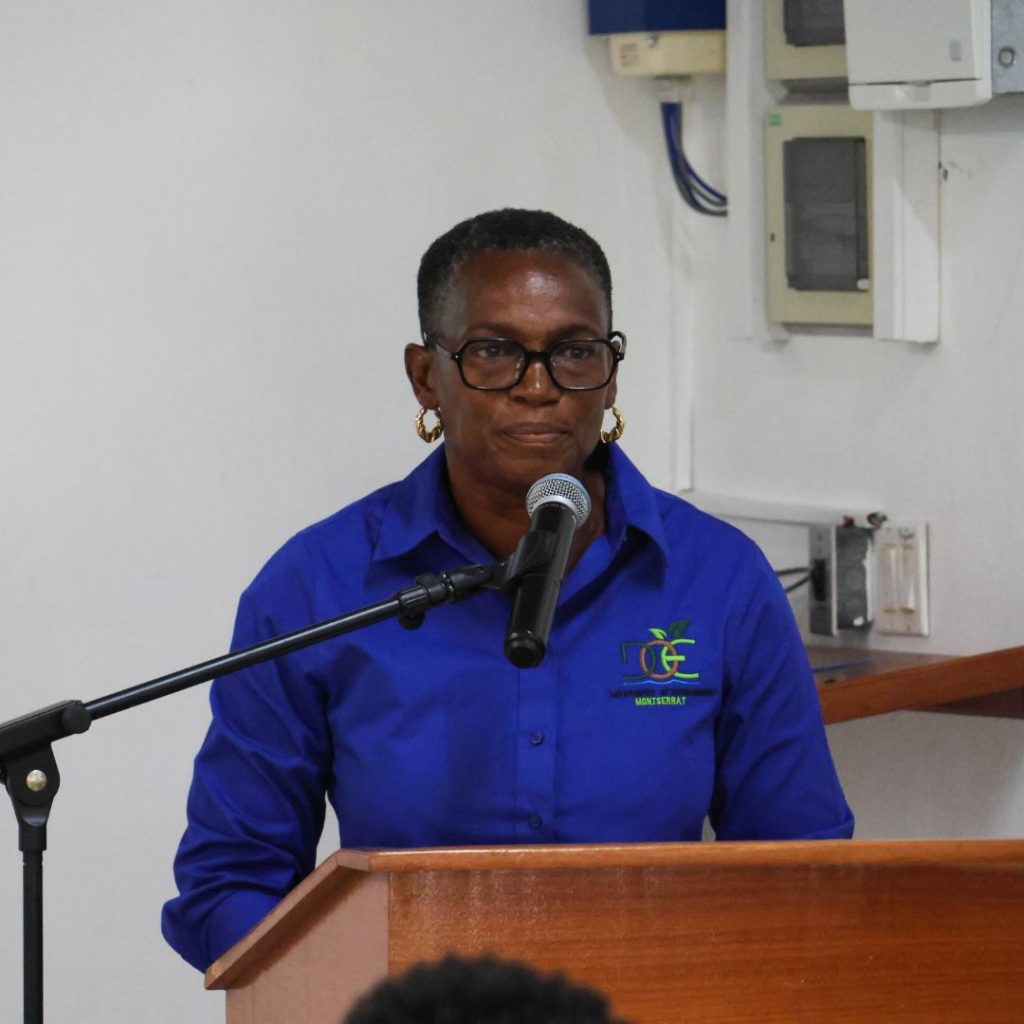
Local Agriculture officials continue to welcome the launch of the Thriving Ecosystems and Communities in Montserrat: Agroforestry and Sustainable Land Management Solutions project. Launched on Tuesday, in collaboration with the Royal Society for the Protection of Birds (RSPB), under the Global Centre on Biodiversity for Climate (GCBC), the project aims to improve the understanding of the island’s forests and water resources, support ecosystem restoration, and explore opportunities for climate-smart agriculture, agroforestry and sustainable land management. Speaking at the launch, Director of Environment, Ernestine Corbett, said the initiative would help authorities make better informed decisions about protecting and sustainably managing the island’s natural environment. She explained that the Department had been seeking to advance the forest inventory and climate modeling initiative for some time, and welcomed the support of the RSPB in bringing the project to fruition. Director of the Department of Environment, Ernestine Corbett The new project will bring together local communities, land managers, farmers, government agencies, and conservation specialists to better understand the island’s natural resources and develop practical approaches to managing them sustainably.

New Initiative to Improve Understanding of Montserrat’s Forests and Water Resources Read More »

New Project Launched to Strengthen Water Security and Climate Resilience

Montserrat is set to strengthen its water security, forest management and climate resilience through a new project launched under the Global Centre on Biodiversity for Climate (GCBC). The initiative dubbed Agroforestry and Sustainable Land Management Solutions, is funded through a UK Government initiative supported by the Department for Environment, Food and Rural Affairs (DEFRA). Speaking at the launch ceremony at the Montserrat National Trust on Tuesday, Minister of Agriculture Honourable John P Osborne said protecting and restoring nature must be recognized as an essential part of development. The project will focus on four interconnected areas, namely, water, forests, climate and livelihoods. Activities will include assessing springs, boreholes and aquifers, identifying priority watersheds for protection, developing a national forest inventory and collecting more detailed climate data specific to Montserrat. The initiative will also explore agroforestry and sustainable land management opportunities to improve agricultural resilience and create new forest-based business opportunities. Royal Society for the Protection of Birds (RSPB) UK Overseas Territories (UKOT) Officer for the Caribbean, Lyndon John, in giving an overview of the project said it presents a significant opportunity for Montserrat to be the first Overseas Territory possess a forest inventory.

New Project Launched to Strengthen Water Security and Climate Resilience Read More »

CARICOM Official Highlights Regional Trade as Key to Food Security for Small Islands

Assistant Secretary General – CARICOM Single Market Trade (CSMT) at the Caribbean Community Secretariat, Ambassador Wayne McCook has been explaining how small island states like Montserrat can benefit from regional food production and trade. He was responding to a question on how the regional grouping can mobilize to provide meaningful assistance to fledgling states to ensure food security. Ambassador McCook was at the time speaking during an interview while on a recent visit to Montserrat. The Jamaican is also an advisor to the Geneva Trade Platform at the Centre for Trade and Economic Integration of the Graduate Institute of Geneva, and a member of the Advisory Board of the Centre for Multilateral Negotiations (CEMUNE). Assistant Secretary General – CARICOM Single Market Trade (CSMT) at the Caribbean Community Secretariat, Ambassador Wayne McCook

CARICOM Official Highlights Regional Trade as Key to Food Security for Small Islands Read More »

Representation Matters in Deep-Sea Mining: Giving Montserrat and Other OTs a Voice

Written by: Keyola Greene Montserrat depends heavily on the ocean. It has supported the economy, boosted tourism, facilitated transportation, and sustained livelihoods, but when decisions about the future of the deep seabed are negotiated internationally, who actually speaks for Montserratians? This question reaches far beyond our black-sand shores and opens up a wider conversation about representation, influence, and the future of the Caribbean Sea. Increased interest in the emerging deep-sea mining industry has sparked concern about how the region is represented in international ocean governance and who has a seat at the table. For decades, Caribbean islands have collaborated to address issues that transcend their individual borders. But what does that cooperation look like when the seas connecting the region do not recognize political boundaries, and everyone does not possess the same or equal power to influence change? For overseas territories like Montserrat, it is more complicated than regional collaboration. It is about individual representation, access to the decision making process, and being able to influence the course of action that will directly affect us. Deep-Sea Mining The deep sea, which is generally classified at a depth where light begins to fade (typically around 200 meters), has been described in a 2007 UN Environment Programme report as “the oldest and largest biome on Earth” that “we have little knowledge of”. It is home to diverse and largely unexplored ecosystems, with unique species and habitats that have adapted to extreme conditions such as darkness, high pressure, and low temperatures. On the seafloor in some parts of the deep ocean are polymetallic nodules, which contain valuable mineral deposits such as cobalt, nickel, manganese, copper, silver, zinc, and other rare metals. These nodules are among the primary targets of deep-sea mining Proponents argue deep-sea mining could provide additional sources of minerals needed for various technologies, while critics question whether the environmental risks are justified given the scientific uncertainties. Much of the exploration and commercial attention has primarily been focused within the Pacific Ocean, particularly the Clarion-Clipperton Zone between Hawaii and Mexico, with small projects taking place in parts of the Atlantic, Indian, and Western Pacific oceans. However, discussions are ongoing over how exploitation should be governed, and while the Caribbean is not currently under the spotlight, some Caribbean states are part of the conversations. Why DSM Matters for the Caribbean The Caribbean’s interest in deep-sea mining should be heightened by the fact that decisions made about commercial seabed mining in one area could set precedents for how the wider ocean is governed. When assessing the Caribbean’s role in deep-sea mining, the region must look to accountability, preparedness, and influence.  Senior Campaigner at RISE UP for the Ocean, Khadija Stewart, says governments considering their involvement must weigh the potential economic benefits against public resources, risks, and limited capacity. “If governments are investing significant public resources in preparing for or participating in deep-sea mining, they should be able to demonstrate why that investment is in the national interest,” she said.  Stewart said, “Building the institutions needed to regulate a new extractive industry has to be weighed against the many other urgent ocean, climate and development priorities facing the region.” “Governments are operating with limited scientific, technical and financial capacity while trying to respond to multiple crises at once. Adding another poorly understood layer of risk without knowing the scale, duration or cumulative consequences would make an already difficult governance landscape even more challenging,” she said.  Concerns of deep-sea mining should not solely be based on what happens at a mining site. Independent Ocean Conservation Policy Consultant Bobbi-Jo DoBush warns that “plumes from deep-sea mining could travel hundreds or thousands of kilometers and affect the entire midwater food web, up to commercially important fish.”  “Noise from deep-sea mining would affect many animals, including those that use sonar for communication, including whales, which provide significant tourism revenue,’ she said.  Stewart says this creates a serious preparedness challenge. “We cannot adequately plan for impacts that science still does not fully understand. Significant gaps remain around deep-sea biodiversity, ecological connectivity, ecosystem functions, recovery and the potential wider consequences of industrial-scale disturbance,” she said. What does meaningful representation look like? The international seabed is governed by the United Nations Convention on the Law of the Sea (UNCLOS), with the Jamaica-based International Seabed Authority (ISA), the international organisation responsible for organising and controlling mineral-related activities in the Area. Caribbean States that are parties to UNCLOS are automatically members of the International Seabed Authority and participate in its Assembly, the Authority’s plenary decision-making body. These include Antigua and Barbuda, The Bahamas, Barbados, Belize, Cuba, Dominica, the Dominican Republic, Grenada, Guyana, Haiti, Jamaica, Saint Kitts and Nevis, Saint Lucia, Saint Vincent and the Grenadines, Suriname, and Trinidad and Tobago. Participation in the ISA Council is more limited: in 2026, Jamaica and Trinidad and Tobago are the Caribbean states serving on the 36-member Council, where much of the detailed negotiation on the regulatory framework for deep-seabed mining takes place. Caribbean Overseas Territories have different constitutional arrangements and do not participate in the ISA in the same way as independent states. For British Overseas Territories, for example, the UK is responsible for external relations, while the territories retain significant self-government.  For British Overseas Territories (BOTs) like Montserrat, the question of who has authority over deep-sea mining has been an ongoing discussion in the United Kingdom (UK) Parliament. On 24 May 2021, the late Lord Jones of Cheltenham asked  the Government whether it had the power to issue deep-sea mining licenses in the waters of BOTs and whether it planned to do so.  In his response, then Minister of Government Lord Callanan said “the Deep Sea Mining Act 1981 (as amended by the Deep Sea Mining Act 2014) sets out the Government’s powers in relation to issuing deep sea mining licences, including the relationship with contracts granted by the International Seabed Authority (ISA).” At the time, he said, “no such Order in Council or Statutory Instrument has been taken forward, and there are no current

Representation Matters in Deep-Sea Mining: Giving Montserrat and Other OTs a Voice Read More »

Climate Factors to Affect Montserrat Remainder of the Year

Several climate factors are expected to affect Montserrat during the remainder of the year. In a social media post, the Disaster Management Coordination Agency (DMCA) here, broke down the latest outlook provided by the Caribbean Climate Outlook Forum (CariCOF), and its significance for Montserrat. The outlook provides important climate information for the October to December 2026 period. During the second half of the Atlantic Hurricane Season and the transition out of the Caribbean Wet and Heat Seasons, very strong El Niño conditions are expected to influence the region. For Montserrat and the wider Lesser Antilles, this means several important climate considerations. Humid heat may linger, particularly during the transition out of the Heat Season, with heatwaves possible. Tropical cyclone activity, as well as showers, wet spells and excessive rainfall events are expected to occur less frequently than usual. However, lower frequency of these events does not mean that the region is free from risk. A single tropical cyclone event can still cause significant or catastrophic effects. The potential for flooding, flash floods and cascading hazards remains high to extremely high across the Caribbean. Heavy rainfall can have serious impacts, particularly in vulnerable areas. Saharan dust incursions is another climate factor to consider. Although less frequent at this time of year, dust incursions may further suppress tropical cyclone development while contributing to heat and poorer air quality. It was also noted that seasonal climate outlooks describe expected trends over months and do not predict specific day-to-day weather events. The DMCA encouraged residents to stay weather-aware and prepared. The Caribbean Climate Outlook Forum (CariCOF) seasonal outlooks are produced through the Caribbean Regional Climate Centre (RCC) of the Caribbean Institute for Meteorology and Hydrology (CIMH).

Climate Factors to Affect Montserrat Remainder of the Year Read More »

Veta Wade Featured in Women in Caribbean Tourism Leadership Magazine.

Ocean researcher and conservationist Veta Wade has been featured in the Caribbean Tourism Organization’s From the Sea Suite, Women in Caribbean Tourism Leadership Magazine. The 2025 publication, dedicated to celebrating female leadership in the vital tourism industry, highlights the Fish ‘N Fins founder’s work to place local communities at the centre of ocean conservation. Wade, has spent more than a decade working to strengthen community involvement in marine conservation in Montserrat and beyond. Her work includes using scientific research, technology and education to help communities better understand and protect their marine environment. Speaking to ZJB News Ms. Wade expressed her feelings about the feature saying, “it feels like recognition of something that I’ve been trying to build here. Not trying, but building here from Montserrat for years. My own path in ocean research, stewardship and the blue economy, it’s seen…across the region and now it’s recognized within the Caribbean Tourism Authority. For me, there is also something deeply personal about being supported by another black Caribbean woman who sees the value in your work and chooses to make space for it. She says the recognition is “really for local people having this space to lead and to create and to earn and care for the places that we call home and we love the most. And this feature, for that reason, feels so much more than recognition. It’s a reminder of what becomes possible when we support each other. And I’m proud, so proud, that Montserrat is doing this in its own small way and it’s doing so in a very tangible way too.” Fish ’N Fins describes its mission as advancing community-based marine conservation while strengthening local capacity and creating opportunities for communities to contribute to global ocean knowledge.

Veta Wade Featured in Women in Caribbean Tourism Leadership Magazine. Read More »

£140,000 Grant Secured to Study the Montserrat Black Iguana & Climate Resilience

The Department of Environment has secured over £140,000 in grant funding for three environmentally focused projects. In a media release on Wednesday, the Department said it was successful in round 6 of the DARWIN Plus UK government grants scheme, designed to deliver long-term strategic outcomes for biodiversity, the natural environment and improving resilience to climate change within the UK Overseas Territories. To this end it has received approximately £145,000 to deliver the projects that would assist in understanding the behaviour and range of the Montserrat Black Iguana, the management and control of the invasive Casuarina and and building capacity to improve the resilience of forest ecosystems. Each programme will increase the knowledge and data sets for the Department and the wider community by improving awareness of the environment, species and ecosystem management. Understanding the spatial ecology of the Montserrat Black Iguana will help to improve management options and address the human-wildlife conflict between iguanas and farmers on Montserrat. The Iguana is considered a threat to the economic wellbeing of farmers, however, the species found on island is believed to be genetically distinct from the green iguana and therefore possibly endemic to the island. Data collected from the project will inform suitable management options to lessen human–wildlife conflict. The invasive Casuarina equisetifolia Management and Biochar Production project outlines a 12-month initiative on Montserrat focused on the mapping, removal and control of the invasive species Casuarina and replacement with native trees. The wood is of a quality fit for charcoal production and persons will be encouraged to use this product to enhance livelihoods. The third project aims to develop capacity of staff of the Department of Environment and local community on sustainable forest management strategies. This will generate a better understanding of Climate Change impacts among department staff, the community and the farming community who utilize lands on the fringes of the protected area and other areas of significant eco services importance. It encourages community stewardship and empowerment through outreach, workshops and training. The project will include reforestation and soil conservation and livelihood diversification activities such as tree planting campaigns, supporting the establishment of income-generating activities such as agroforestry in deforested areas and promoting the importance of forest conservation and sustainable resource utilization. All 3 projects are designed to align with national priorities by fulfilling the Conservation and Environmental Management Act’s requirements for evidence- based management of native wildlife, contributing directly to national goals to improve agricultural productivity, strengthen local food systems, and reduce reliance on imports. The projects also align with the Montserrat Physical Development Plan, which promotes the rehabilitation of degraded landscapes, the maintenance of healthy ecosystems, and the sustainable use of land to reduce erosion and protection coastal and terrestrial habitats. The projects fit into national priority and operational plan of the Department by building capacity which is a critical element of the 2025-2026 Strategic priority of the Ministry of Agriculture, Lands, Housing and the Environment. The projects are in the process of being implemented and come to an end in March of 2027.

£140,000 Grant Secured to Study the Montserrat Black Iguana & Climate Resilience Read More »

Island-Wide Clean Up Initiative to Commence on Saturday

The Office of the Premier is organizing an island-wide collection of unwanted white goods and old televisions. This collection, to be coordinated by the Disaster management Coordination Agency (DMCA), forms part of Montserrat’s 2026 Hurricane Preparedness Programme. The islandwide collection will be carried out in phases. The first collection will take place on Saturday 25 July, and Sunday 26 July, 2026 beginning at 8:00 AM each day. This collection will cover Salem and the surrounding communities of Old Towne, Olveston, Friths, Hope, Flemmings, and Isle Bay Hill. Collection dates for other areas will be announced. Items to be collected include: refrigerators, freezers, stoves, washing machines, clothes dryers, microwave ovens, and old televisions. Vehicles and scrap metals will not be collected as part of this cleanup. Residents are encouraged to place eligible items at the roadside before 8:00 a.m. on collection day to ensure they are picked up.

Island-Wide Clean Up Initiative to Commence on Saturday Read More »

Stakeholders Unite to Shape Montserrat’s Marine Future

Montserrat’s ocean assets cannot be understated. This from Governor, Her Excellency Harriet Cross as she gave remarks at the opening ceremony of a two-day Blue Belt Programme workshop here. Governor Cross highlighted the abundant resources in Montserrat’s waters, saying persons must be made aware of its significance. Meantime, Minister for Agriculture, Lands, Housing, the Environment, Youth Affairs and Sports, Hon. John P. Osborne spoke on the importance of managing this environment through a practical and enforced workplan. The Blue Belt Programme workshop, which was held between 14-15 July, brought together stakeholders from across different sectors to have interactive discussion on Montserrat’s marine priority areas. The workshop comes after Montserrat officially joined the Blue Belt programme on 8th June 2026.

Stakeholders Unite to Shape Montserrat’s Marine Future Read More »

DMCA Calls for Greater Climate Resilience on World Environment Day

The Disaster Management Coordination Agency (DMCA) is encouraging residents to recognize the important link between environmental protection and disaster preparedness as Montserrat joined the global observance of World Environment Day on June 5. In a social media post last Friday, the agency marked the occasion under the theme “Inspired by Nature. For Climate. For Our Future,” noting that the message is particularly significant for Montserrat given the climate-related challenges forecast for the coming months. The DMCA referenced the latest outlook from the Caribbean Climate Outlook Forum (CariCOF), which points to an increased likelihood of several climate hazards during the June to August period. These include rising temperatures and possible heatwaves; an elevated risk of bushfires during hot and dry conditions; intense rainfall events capable of triggering flooding and flash floods; the start of the Atlantic Hurricane Season; and recurring Saharan dust episodes that can reduce air quality. According to the agency, protecting the environment and strengthening climate resilience are critical components of disaster risk reduction. The DMCA noted that healthy ecosystems can help communities better withstand natural hazards, while sustainable environmental practices can reduce vulnerability to disasters. The agency emphasized that building a resilient environment is an important step toward creating a more resilient Montserrat.

DMCA Calls for Greater Climate Resilience on World Environment Day Read More »